
 Facebook
 X
X
 Pinterest
 Copy Link
Justice Department to Appeal Judge’s Order on CDC Eviction Moratorium

After a federal judge in Texas ruled last week that the federal government’s eviction moratorium is unconstitutional, the Justice Department says it will appeal.
The appeal comes days after U.S. District Judge J. Campbell Barker issued a 21-page ruling saying that the Centers for Disease Control and Prevention’s eviction moratorium is unprecedented, overbroad and unlawful.
“Although the COVID-19 pandemic persists, so does the Constitution,” the judge wrote in last Thursday’s decision.
He added that while individual states have the power to enact such restrictions, the federal government does not.
“The federal government cannot say that it has ever before invoked its power over interstate commerce to impose a residential eviction moratorium,” Barker wrote. “It did not do so during the deadly Spanish Flu pandemic. Nor did it invoke such a power during the exigencies of the Great Depression. The federal government has not claimed such a power at any point during our Nation’s history until last year.”
In response, the acting assistant attorney general in charge of the Justice Department’s civil division said that prosecutors respectfully disagree with the ruling.
“The CDC’s eviction moratorium, which Congress extended last December, protects many renters who cannot make their monthly payments due to job loss or health care expenses,” said Brian Boynton in a statement issued Saturday. “By preventing people from becoming homeless or having to move into more-crowded housing, the moratorium helps to slow the spread of COVID-19.”
The CDC eviction moratorium was first signed by President Donald Trump last September, and has been extended twice. Most recently by President Joe Biden who — in his first day on the job and within hours of his inauguration — extended the ban until March 31.
The order has kept many of the country’s most vulnerable citizens from being forced out of their homes and deeper in debt during a public health emergency that has crippled the U.S. economy, and put 22 million Americans out of work last year, according to a report by Moody’s Analytics Chief Economist Mark Zandi.
Individuals with an estimated yearly income under $99,000 or joint-filing couples under $198,000 for 2020 are eligible, providing that their failure to pay rent is due to the coronavirus pandemic and that they would be displaced and forced into a “shared living” situation.
However, loopholes exist that allow some evictions and foreclosures to continue, as local housing courts across the country have interpreted the CDC order differently. In October, the CDC issued nonbinding guidance that landlords could file to evict tenants, as long as other stages of the eviction process, for example issuing a writ of eviction at the end of the case, are halted.
Meanwhile, small landlords are shouldering a huge economic burden due to the pandemic and resulting eviction ban. In fact, some property rights advocates warn that the eviction ban is not only straining the finances of landlords with fewer rental units, but also discouraging new rental units from being put on the market.
The federal government has yet to address the looming eviction crisis with a viable long-term plan.
Seller Success Story: A little TLC nets 20 offers & $200,000 over list for Southeast Seattle Home

If I could rate my sellers George and Nancy, they would get way more than five stars! Nancy contacted me after looking on Zillow for an agent who specializes in Southeast Seattle, and we immediately hit it off, as she is a big dog rescuer, which is close to my heart. The organization she’s involved in, Animal Aid & Rescue Foundation, brings dogs up from the South, including Texas and Louisiana, who are in kill shelters and about to be put down. If you know anyone looking for a dog this would be a great organization to support. I met two of their own rescue dogs, and they are such sweeties.
George bought an investment property 10 years ago and had been renting to the same great guy the entire time. However, due to Covid, the tenant, who was a bartender, lost his job and decided to move to Mexico. Having lived there for such a long time, it took him a while to empty the house of his belongings. Luckily, he left it in decent shape, but it really needed some sprucing up to make it look its best.
However, I always try to reel clients in as it is easy to go overboard and spend too much money, often focusing on things that a potential buyer would not even notice. As I point out to my sellers, most buyers are in a house for 30 minutes or less, especially right now, and unless they have their own inspection, that may be the only time they are in the house at all prior to purchase!
This property was also on a big lot with a nice view of Lake Washington so there was the possibility that a developer/builder would buy it and build a much bigger house, so again, spending a ton of money on improvements made no sense. I planned to market it in the single family and vacant land category to attract both types of buyers.
The house was a sweet two bedroom, 1940’s, 950 sq. ft. bungalow with an unfinished basement. It was definitely dated as the kitchen had old dark wood cabinets, a Formica counter (albeit in good shape) and a very worn linoleum floor, so I suggested an inexpensive make-over. We painted the cabinets an off-white and replaced the floor with a retro type of vinyl to complement the era of the house. Nancy found the perfect flooring which was way cheaper than Marmoleum. We also replaced the flooring in the small bathroom with the same product in a different color.
The whole interior also needed painting to brighten it up, and the hardwood floors could have done with refinishing, but to save money, I had a contractor come in to clean and buff them up, and they looked way better. After a service call to clean the old gas furnace, we discovered, unfortunately, that it needed replacing, which was the biggest cost, however necessary.
George is very skilled at everything, it seems, and super diligent, and he did all sorts of other improvements, including replacing the back doorsteps and landing, installing new doors for the back deck and basement, new faucets, new locks, and several other things. I had a hard time getting him to stop! He really was an A+ seller!
So, by the time we were ready to market the property it looked super sharp. We ended up with 20 offers, and it sold for more than $200,000 over the list price, to a local couple who planned to live there and at some point, expand the house and finish the basement. All the hard work paid off, and I must thank Nancy and George for all the hard work they put into the house. They made my job a lot easier, and they were great to work with.
Congratulations, you two!
Striking Restrictive Racial Language from Your Title

Restrictive racial covenants—which excluded people of color from purchasing, leasing, or occupying homes in certain neighborhoods, developments, or regions—have been deeply embedded in the practices of the housing industry since the early 20th century. Although the Supreme Court ruled that municipally mandated racial zoning was unconstitutional with 1917’s Buchanan v. Warley, this decision extended only to government action such as city ordinances, and not to private agreements such as restrictive covenants.
This left the door open for discrimination in real estate to continue. The Supreme Court’s 1926 ruling in Corrigan v. Buckley validated the use of racially restrictive covenants, and they quickly became common practice. Shortly thereafter, these restrictions were endorsed by federal housing administrators and lenders alike, creating a system that shaped communities and segregated neighborhoods throughout the country.
In 1948, with Shelley v. Kraemer, the United States Supreme Court ruled that these racial deed restrictions were no longer enforceable. But the structures of segregation remained intact and real estate brokers, agents, and property owners continued to discriminate based on race.
Congress struck a blow against these practices by passing the Fair Housing Act in 1968, which prohibited discrimination on the basis of race, color, religion, or national origin in the sale or rental of housing. However, the language of restrictive racial covenants is still written in the chain of title for many homeowners nationwide.
Striking Restrictive Language By State
As part of our commitment to diversity, equity, and inclusion, Windermere has prepared educational content on how homeowners can remove racially restrictive language from their chain of title. Of the ten states that Windermere operates in, there are processes in place to remove this language in Arizona, California, Colorado, Idaho, Nevada, Oregon, and Washington. Homeowners in Idaho will note that the process to strike restrictive language is subject to change, pending the legislature’s passing of I.C. § 55-616 in 2021. In Hawaii, Montana, and Utah, there is currently no process for the removal of discriminatory covenants from a chain of title, nor is there pending legislation to address the issue. In Hawaii and Utah, although there is legislation in place declaring such covenants void, there is nothing currently in place that permits a court or auditor to strike the restrictive language from the title.
Contact me to begin the process of striking the restrictive language from your title.
YOU’RE INVITED: 2021 Housing & Economic Forecast with Matthew Gardner, Economist

Mark your calendar!

I’d like to invite you to attend an online presentation of the 2021 Housing and Economic Forecast by our in-house economist, Matthew Gardner. While it’s anybody’s guess what the future holds in our dynamic market, his insights are enlightening and useful.
Please contact me, and I will forward you the Zoom link as soon as it’s available.
As Chief Economist for Windermere Real Estate, Matthew Gardner is responsible for analyzing and interpreting economic data and its impact on national and regional real estate markets.
In addition to his day-to-day responsibilities, Matthew sits on the Washington State Governors Council of Economic Advisors; chairs the Board of Trustees at the Washington Center for Real Estate Research at the University of Washington; and is an Advisory Board Member at the Runstad Department of Real Estate at the University of Washington where he also lectures in real estate economics.
Matthew’s forecasts are used by the Federal Reserve Bank of Philadelphia, Reuters, and he also participates in Zillow’s National Home Price Expectation Survey.
Thanks,
Serena
JUST LISTED: Not Your Typical Columbia City Townhouse
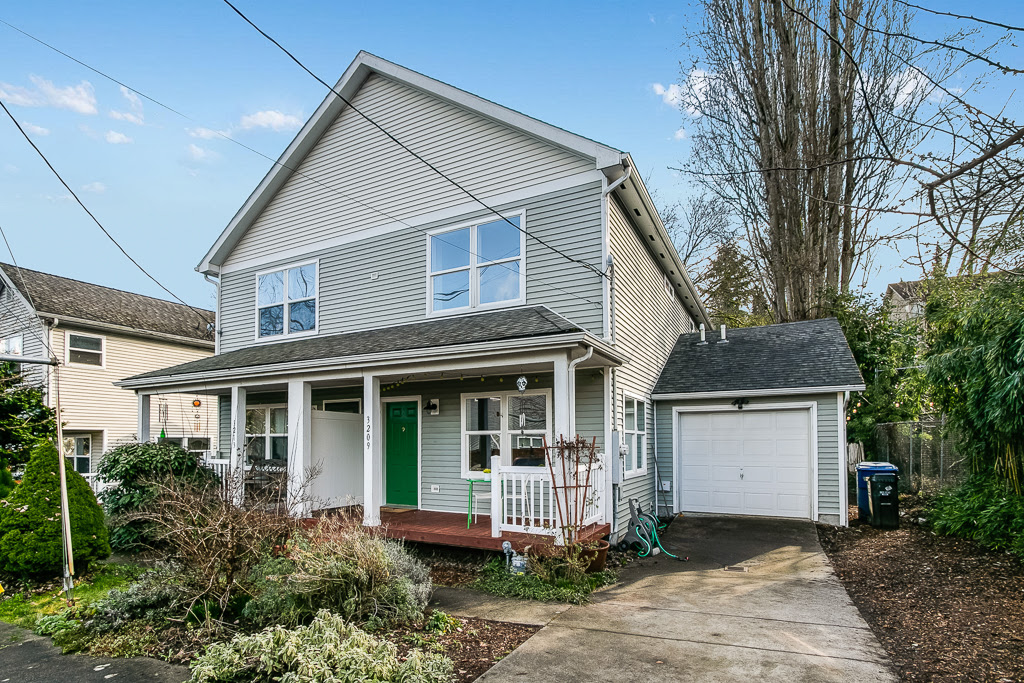
3209 South Juneau St.
Seattle, WA 98118
Listed at $525,000
- Beds: 3
- Baths: 2
- SQFT: 1,400
- MLS #: 1724325
- Taxes: $4,566 (2020)
- Lot Size: 4,177 SQFT
- Year Built: 2001
- Community: Columbia City
Not your typical townhouse with tiny bedrooms and a postage stamp size yard! Freshly painted with brand new carpet, this turnkey home, with high-speed internet, has lots of room and is creatively designed for all ages to work at home. Flooded with natural light from so many windows, with golden hardwoods on the main, a comfy living room, separate dining area & eat-in kitchen with tons of storage, plus a pantry & stainless gas range. Upstairs there are 3 good sized bedrooms, with ingenious custom built-in work spaces. Outside, there’s a huge park-like backyard & out front an amazing organic garden w/raised beds for berries, herbs, veggies + several fruit trees. Easy access to light rail, Columbia City, Chief Sealth bike trail, & freeways.
Information provided as a courtesy only, buyer to verify. For more, go here.


Buying with Remodeling in Mind

Everyone has their own definition of a dream home. For some, they know right when they see a home that it’s perfect as is. For others, it takes remodeling to achieve their vision. Whether you’re looking for something in need of a few upgrades or a total fixer-upper, buying with the intention of remodeling comes with added considerations.
Finding the Right Home to Remodel
When it comes to choosing the right home to remodel, you’ll want to look for a property that not only aligns with your renovation plans but has significant ROI potential. How much value a home stands to gain depends on a variety of factors, like the cost of the project and your local market conditions. Knowing this information will help paint a picture of a home’s potential ROI. By conducting detailed Comparable Market Analyses (CMAs), your Windermere agent can provide helpful info on how similar homes in the neighborhood have performed on the market. Though these factors don’t provide a concrete valuation, they will help you understand how much your home could be worth.
Choose the Right Remodeling Projects
The right remodeling projects are the ones that align with your plans for living in the home. If you’re looking for an investment property, you’ll be targeting renovation projects that appeal to buyers, like a kitchen remodel, attic conversions, garage door replacement, and exterior projects that boost the home’s curb appeal. However, if you’re planning on putting down roots and staying for an extended period of time, you’ll want to focus on projects that maximize your enjoyment of the space. In either case, any structural issues require immediate attention and should be at the top of your list.
Know Your Remodeling Budget
Your remodeling budget will help you determine the scope of renovations you’re able to afford, and ultimately, which home is right for you. Knowing this information will help your agent identify which homes fall within your range. It will also guide your conversations with your lender when structuring your loan. For more information on home renovation loans, talk to your Windermere agent.
Break Down Your Remodeling Costs
Although remodel cost estimates aren’t always final, they give you an idea of what you can expect to spend. No renovation comes without hurdles and complications, so leave some wiggle room in your budget for unforeseen costs. This will allow you to expect the unexpected and stay within your budget. A cost breakdown will also help to identify areas where you can save money by doing-it-yourself. Painting projects, landscaping, and small-scale demolition are common DIY projects that can add up to significant savings.
Find the Right Contractor
For the remodeling projects that require professional expertise, finding the right contractor is another pivotal step in making your dream home a reality. Start by reaching out to your circle of friends and family for referrals. If someone you know and trust had a positive experience with a contractor, that’s a great starting point. Continue your search by gathering information for multiple contractors in your area and request project bids and timelines from each one. This will allow you to compare pricing and make a more informed decision.
Conduct Thorough Inspections Before Remodeling
Buying a home with the intention of remodeling means that a home inspection is likely to produce a longer list of items than a newly constructed home. Conducting a thorough home inspection is critical to formulating your plans for remodeling. Additionally, it will help identify which issues need immediate attention, enabling you to negotiate repairs and concessions, so long as the inspection is performed during your inspection contingency period.
Southeast Seattle Sees Greatest Home Sale Price Increase in King County

It’s no question that 2020 was an unprecedented year in just about every way possible — including real estate. Low inventory and high demand sent home prices skyrocketing, ratcheting up the competition in King County’s already hot market. This competition didn’t slow down in the winter months either, as neighborhoods continued to see a rise in prices and home sales through the end of December.
But among the region’s most competitive neighborhoods, which ones fared the best at the end of 2020? Recent data from the NWMLS gives us some insight into King County’s strongest neighborhood markets.
Ballard/Greenlake and North Seattle both saw a marked increase in closings. Compared to December 2019, the neighborhoods both saw a 44% increase in closings. Ballard/Greenlake also had a significant price increase, from an average of $705,000 in December 2019 to $776,500 this year.
In terms of Seattle price increases, Southeast Seattle saw the greatest gains, coming in with an average increase of 16.4% in the neighborhood.
Last month, Queen Anne/Magnolia saw the number of houses under contract in their neighborhood more than double from December 2019, also indicating a strong interest in the area.
King County at large also performed well at the end of the year, with closed sales rising over 28% from December 2019, and the median price increasing almost 10%. In Seattle specifically, the number of closed sales rose 30.7% and the median price increased 5.8% year-over-year. On the Eastside, Kirkland/Bridle Hills saw the largest price increases in the county.
BUYER SUCCESS STORY: Clients Finally Find Dream Home After 2 Years

Vero and Markus with their youngest daughter Neuhen were referred to me by a couple of past clients. The family wanted to move from their beloved southeast Seattle townhouse and buy a much bigger house in the same area that would accommodate their daughter Chiloe, son -in-law Jason, and possibly their other daughter, so that they could live more communally, but each have their own privacy.
They really liked the architecture of mid-century houses, which also worked well for their needs style- wise, as they often have daylight finished basements.
As big vegetable gardeners, the family also wanted a good-sized lot with lots of sun. Plus, as time went on, Jason wanted the possibility of having his grandma live with them in a separate space, so they really needed a separate live-able structure or space to build a DADU. Good public transportation options were also important as Jason did not drive and he works on Capitol Hill.
Trying to accommodate so many needs was not easy, especially in a market with low inventory that was increasingly becoming more competitive! We saw several houses that just needed way too much work, or the yards were too small, on big slopes, or otherwise not what they wanted.
We spent more than two years searching, and they lost out on a couple of houses that could have worked. However, towards the end of 2020, they finally found an incredible mid-century with vaulted ceilings, plenty of space for all, and a gorgeous, original, floor-to-ceiling, two-sided stone fireplace. The house is on a wooded lot with a vast front yard facing south for vegetable gardening, and to top it all off, an amazing territorial view with Mt Rainier at center stage! This really was the best house they’d seen, so it was worth the wait! I am so happy for them, they are such a lovely family and were really great to work with.
As with many other clients, I feel like we’ve become good friends. Congratulations, everyone!
JUST LISTED: Secluded Bungalow on Huge Corner Lot with Lake Washington View
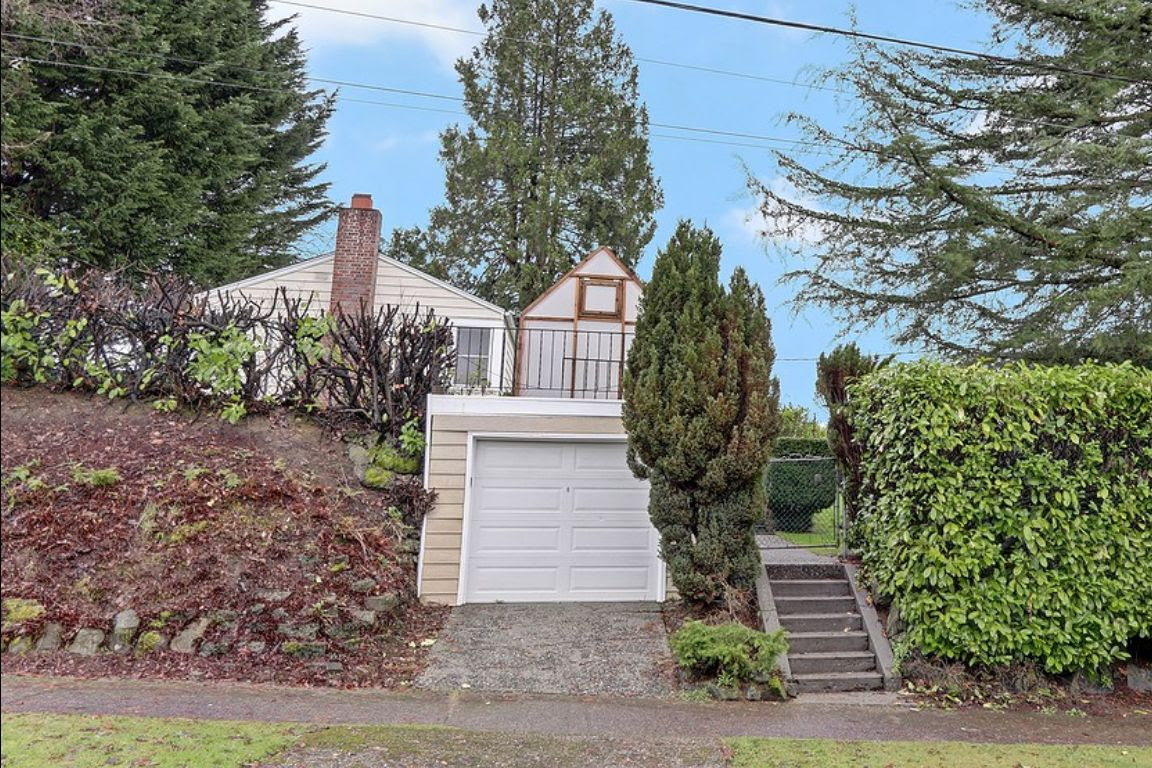

4807 South Hudson St.
Seattle, WA 98118
Listed at $650,000
- Beds: 2
- Baths: 1
- SQFT: 1,900
- MLS #: 1716960
- Taxes: $5,448 (2020)
- Lot Size: 7,621 SQFT
- Views: Lake
- Community: Columbia City
- Year Built: 1940
Secluded, well-maintained, 2 bed, 1 bath, 1940’s bungalow on a huge corner
lot with a nice view of Lake Washington. Such a lovely spot to call home, with
so much potential to build up or just enjoy as it is. Sweet original details:
archways, tiled working fireplace, oak hardwoods & a separate dining room.
There’s also a full basement with potential to create more living space. A fully
fenced yard complete with green house offers lots of space to garden,
entertain & play. Plus, a 1 car garage for parking or extra storage. Updated
electrical, roof, windows, H2o heater, fridge & brand-new furnace. Easy stroll
via secret stairs to Cafe Vita, 3rd Place Books & Pizzuto’s. Seward Park, lake,
dog park & downtown Columbia City all walkable.
Information provided as a courtesy only, buyer to verify. For more, go here.
10 Ways to Save Money by Going Green

Contrary to popular belief, going green does not have to be hard or cost money, in fact it can even save you money. There are many small things that you and your family can do within your home to save money while reducing landfill waste and the use of natural resources. Discover a few ways to go green and save some money by choosing a green home.
1. Compost Bin
Composting is free and can provide you with rich soil to garden with. You will never have to buy soil and can easily grow plants and vegetables. To create your own bin, get a large trashcan with a locking lid, then drill about 25 holes all around the bin and attach the bin to small platform (allows it to drain). Once you start putting approved items in the bin go outside and roll it around in the grass every few days.
2. Energy Efficient Light Bulbs
You can save approximately $75 dollars a year by replacing your traditional incandescent with energy efficient light bulbs. On average energy efficient light bulbs typically use way less energy and can last much longer, not needing to be replaced as much.
3. Laundry
There are quite a few options to save money and energy when it comes to laundry. Here are a few: wait till you have a full load of laundry to wash, line dry your clothes, wash your clothes in cold water and when it comes time to get a new washer and dryer buy an energy efficient one.
4. Weather-Strip & Caulk
One of the main ways we use a lot of energy, especially in hot and cold climates, is through air-conditioning and heating. One way to reduce the use of heating and air-conditioning is to properly weather strip and caulk all windows and doors keeping your home cool and warm when needed.
5. Reuse and Reduce
Use items more than once when you can to avoid throwing them out; this might mean buying quantity over quality. Another way is to join The Freecycle Network or Buy Nothing group on Facebook you can swap used goods with neighbors for free and also keeping more waste out of landfills.
6. DIY Cleaning
Start making your own cleaning products. Not only can you customize, make them eco-friendlier but you will also save money buying products. On average, most DIY cleaners cost less than a $1 to make per bottle compared to $5-$15 per store bought bottle.
7. Unplug & Turn Off
Put all your major electronics on a power strip and shut off when they are not in use. Even if your electronics are shut off, they still will continue to draw electricity thought out the day. Another tip is to make sure you unplug your cellphone when completely charged and always power everything down while not in use to save on battery life.
8. Toilet
There is an extremely easy way to make your toilet a low flow toilet. Simply add a brick, wrapped in a waterproof bag or take a plastic water bottle and fill it with sand putting it into your tank. This will reduce the amount of water with every flush. Once you are ready for a new toilet purchase a low-flush toilet.
9. Shower
Change up your shower head with an energy-efficient shower head that will use half the amount of water. These shower heads are low flow but will significantly cut your water bill down. Another option is to install a tap aerator which will also cut down water usage without changing the water pressure.
10. Rain Barrels
Rain barrels capture water from a roof and hold it for later use such as on lawns, gardens or indoor plants. Collecting roof runoff in rain barrels reduces the amount of water that flows from your property. It’s a great way to conserve water and it’s free water for use in your landscape.
