
 Facebook
 X
X
 Pinterest
 Copy Link
Technology in Your Home


Every year there are more products that come out to automate your home. There are many reasons to add technology and to automate your home including safety, security, efficiency and convenience. Here are some reasons and products that are must have for your home.
For Safety
There are many products that will help keep your family and home safe and prevent disaster.
- Water sensors – Water damage is a common issue within homes. There are many types of water sensors that will detect water from a burst pipe, a broken supply line or clogged toilet. Water sensors will alert you if your home gets a leak so that you can act quickly to prevent any more damage.
- Indoor room sensor – An indoor room sensor is like a smoke detector with many more functions. Most indoor room sensors can detect indoor air quality, temperature, and humidity to help you monitor your home. You will receive alerts, and many are also voice activated.
For Security
Add these products to keep a close eye on your home and belongings while you’re away, or while you’re home
- Security cameras – Now with home automation you will be able to keep a close eye on the inside and outside of your home. You can get security cameras that include audio recording, motion detection and allow you to view footage remotely using an app.
- Door & window sensors – there are many types of door sensors that will fit your budget. Most are small and sleek so they are undetectable, when their magnetic field is broken by opening a door or window you will receive a notification of the exact window or door that was disturbed.
Smart lock – These are great not just for security but also for convenience. With smart locks you can lock and unlock your door from anywhere.
For Convenience
Take control of your home with automation and smart tech that is simple and convenient.
- Smart blinds – smart blinds allow you to lower the blinds without ever getting up. There are few different options for smart blinds to control with a remote, your eye phone or connect them to your Alexa to make them voice activated.
- Smart fridge – Smart fridge options can include a lot of different features depending on what you are looking for. Smart fridges can include touchscreen interface that connect to the internet, internal cameras, cooling options and a connection to your phone so that you can control it remotely.
- Smart vacuums – smart vacuums are a great self-cleaning tool that you can activate while you are out of your home. These vacuums will clean your floors without any physical labor and can be controlled remotely.
For Efficiency
Smart technology can help make your home run more efficiently & save you money.
- Smart Home lighting – with smart home lighting you can control lights in your home remotely. Set a schedule or turn off and on and dim to save energy powering your lighting.
- Smart fan – With a smart fan you can control the speed and how long your fan is running. This allows you to turn on the fan at optimal times while also shutting it off when the energy it uses is no longer benefiting you.
- Temperature control – For controlling temperatures within your home look for a smart thermostat. Features for smart thermostats include Wi-Fi capabilities, scheduling when your heating and cooling systems start and stop. Most include energy reports so you can adjust how you use the system.
How to Increase Your Buying Power

When visualizing your dream home, it’s common for buyers to focus on the physical characteristics. But to mortgage lenders, a home is a numbers game. The following categories related to your buying power demonstrate how lenders identify your financial standing and determine your eligibility for a home purchase. Improvements in these areas will increase your buying power, propelling the strength of your offer when you’re ready to put it on the table.
Increase savings for your down payment
As the saying goes, cash is king. The down payment—often 20% of the home’s sale price—can sometimes be the deciding factor between competing offers for a particular home.
Try stashing away a little of each paycheck to build up your savings over time. Set a savings goal, commit a dedicated amount to each pay period, and watch the savings build as time goes on. If you prefer to keep your money separate, open a new account to which you can dedicate the added savings. Another way to save for your down payment is to generate additional income. If you have interest or experience in an area outside of your current job, explore opportunities for part-time work and dedicate the income earned to your down payment savings.
There are numerous benefits to offering a serious down payment. Putting 20% or more down can help your offer stand out, it may allow you to negotiate a lower interest rate on your mortgage and could remove the need for private mortgage insurance (PMI).
Improve your credit score
Plain and simple—a better credit score leads to better interest rate on your mortgage. Your payment history, amounts owed, length of credit history, credit mix, and new credit all factor into your credit score. Although improving it will not happen overnight, a higher credit score will pay dividends in the long run.
To improve your credit score, focus on paying down your credit cards, especially those with high interest. Refrain from opening new lines of credit that aren’t necessary and stay away from large purchases leading up to the time when you are preparing to make an offer. Keep in mind that student loans factor into your financial picture. Paying them off consistently will improve your financial standing in the eyes of lenders.
Stabilize your debt to increase buying power
When assessing what you can afford, banks will examine your debt-to-income ratio. Lenders want to know that you’ll be able to pay your mortgage on top of your remaining debt.
They do this by looking at your housing ratio, or front-end ratio, to determine what portion of your income will go to paying your mortgage. Your front-end ratio is calculated by taking your monthly mortgage payment and dividing by your monthly gross income. The higher the ratio, the higher risk of default.
Next, your back-end ratio, or debt-to-income ratio, is used to determine how much of your monthly income goes toward paying your debts. Your back-end ratio is calculated by taking your monthly debt expense (the principal, interest, taxes, and insurance of your mortgage payments, credit card payments, student loans, and any other loan payments), and dividing it by your gross monthly income.
Similar to your credit score, paying off credit cards, and making steady, consistent progress on your loans will help to decrease your debt and improve your debt-to-income ratios, which will increase your buying power.
Although these aspects of your finances don’t cover everything that goes into the purchase of a home, they do play a significant role in how lenders assess your financial standing and thereby eligibility for approval. Increasing your buying power takes time and strategy. Plan accordingly so that when you find your dream home, you’re in the best position possible to buy it.
Your Winter Home Maintenance Checklist


Winter is a magical season to spend at home. We all want to be able to enjoy the shorter days and longer nights from the comfort of our homes while we watch the season change.
To truly enjoy this winter at home with peace of mind, you’ll want to complete a home maintenance checklist to prevent unexpected costs, ensure your family’s safety and warmth, and keep your home in the best shape for the winter season ahead.
1. Weatherproof Windows & Doors
One of the best preparatory measures you can take to keep the cold from infiltrating your home is to weatherproof your windows and doors. Any leaks or cracks could lead to a chilly household and increased heating costs. Either weatherstripping or caulking will do the trick for minor leakage issues, but for any severe problems you may want to consider a replacement.
2. Protect Your Pipes from Freezing
Burst pipes can be disastrous regardless of the season, but winter temperatures pose a greater risk than any other time of the year. Be sure to wrap interior pipes to provide them some insulation against the change in temperature. You’ll want to bring all hoses inside but remember to turn off your exterior water source before you do.
3. Prepare for a Winter Storm
Being fully prepared for the winter ahead includes completing both preventative home maintenance and disaster preparedness tasks. Keep a supply of flashlights and batteries handy in case a power outage should occur. If you have a fireplace, stock up on firewood so you’ll have plenty of fuel for your heat source. It’s best for your family to put together an emergency kit and evacuation plan so you’re prepared for any local weather emergencies.
4. Chimney Sweep and Fireplace Maintenance
We become more reliant on fireplaces, wood burning stoves, and chimneys to heat our homes during the winter. Accordingly, it’s crucial to prepare for the uptick in their usage. Clear out your air vents before your daily fires begin. When your fireplace is not in use, be sure to close the damper to save energy. Clogged chimneys can lead to house fires and carbon monoxide poisoning. Investing in a chimney sweep can save you money in the long run, while avoiding health scares.
5. Clean Out Your Gutters
After all the leaves, pinecones, pine needles, and other autumnal debris have fallen, it’s best to clean out your gutters in preparation for winter. By keeping your gutters clean you’ll avoid gutter damage from melted snow draining improperly. Make sure your downspouts are pointing away from your home’s foundation to prevent basement leaks and flooding.
6. Heating System Maintenance
Keeping up on your heating system’s efficiency is an integral part of winter home maintenance. If you use a furnace, be sure to clean out your air filters and ducts, making replacements as needed. Covering your HVAC system can help to prevent damage from any debris or moisture getting in. To protect against heat loss, seal your ducts with mastic tape or foil tape.
7. Reverse Your Ceiling Fans
If you have ceilings fans in your home, there is a handy trick you can use to improve your home’s heating efficiency. By reversing the direction of your ceiling fan—running the blades in a clockwise direction—you’ll create a slight updraft, forcing warm air near the ceiling downward.
8. Bring Your Plants Inside
The winter season usually spells trouble for your potted plants. However, there are methods to keep them alive indoors through the winter months. You’ll want to provide continual air circulation, so keep a fan blowing in the direction of the plants. It’s best to mirror the conditions the plants will face outdoors, so you can afford to keep watering to a minimum. Since it is a harsher season, keep a close eye on your plants as the winter progresses.
After your checklist is completely crossed off, you’ll be able to kick back, relax, and enjoy your winter at home in comfort knowing your home is primed and ready for the winter season ahead.
Local Giving: Treehouse for Kids
Dear friends,
Typically, my office Windermere Mount Baker comes together with our community in December to host a toy drive and fundraiser for Treehouse.
And while we won’t be able to gather this year, we do want to encourage everyone to please support this great organization that provides assistance to children that have experienced foster care in our community.
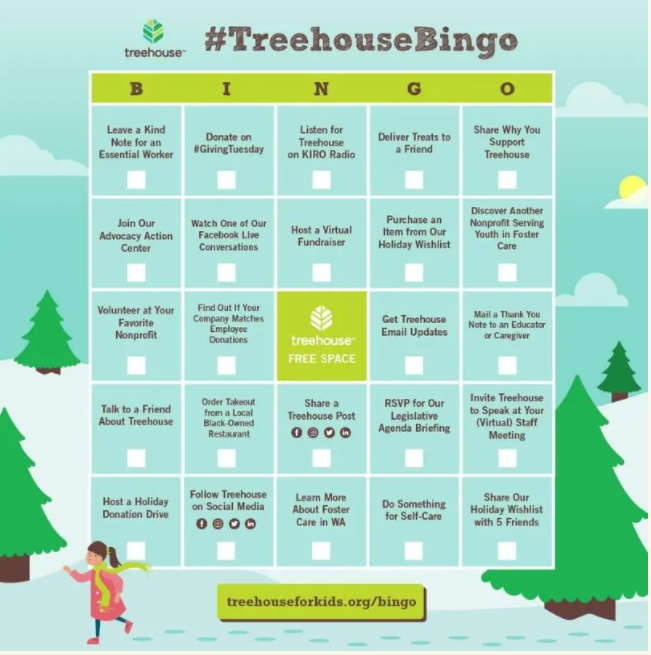
Introducing Treehouse Bingo! It’s the traditional bingo game with a little twist, incorporating different ways to engage with Treehouse and your community. We hope you have fun completing squares and challenge your friends and co-workers to see who can get bingo first.
When you have a bingo, submit your card to us at events@treehouseforkids.org and you’ll be entered to win Treehouse or Seahawks goodies.
How to Play
Keep track of ways you support youth in foster care from now through Friday, January 8, 2021, by completing a holiday action in the matching square. You may only use each holiday action once per card. If you already do things on the card like follow us on Instagram or receive our email updates, you can mark those spaces as complete.
Download your bingo card: PDF | Social Media Story | Social Media Post
JUST LISTED: Rare 1909 Duplex in Columbia City with Lots of Old World Charm


4412 42nd Ave S.
Seattle, WA 98144
Listed at $715,000
- Beds: 4
- Baths: 2
- SQFT: 2,180
- MLS #: 1694317
- Taxes: $6,619 (2020)
- Lot Size: 7,200 SQFT
- Year Built: 1909
A rare bird, a 1909 Duplex in Columbia City, with lots of OWC, oak floors, high ceilings, wainscoting & gorgeous multi-paned west-facing windows on the spacious vacant upper unit. There’s a big living room and separate dining room flooded with natural light, an eat-in kitchen and 2 good sized bedrooms, plus a lovely east facing deck. Lower 2- bedroom unit has charm also and is rented to a great tenant since 2006. There’s a separate garage with 2 storage rooms underneath, which would make an amazing studio. Plenty of space to garden and add a DADU on the large lot adjacent to Genesee Park. Lake, Columbia City, Parks, and light rail all easily walkable.
Information provided as a courtesy only, buyer to verify. For more, go here.


10 Costs Associated with Selling Your Home

Here are 10 most of the most common costs that come with selling a home:

1. Commission fees
Of all the expenses that come with the sale of a home, agent commission fees are usually the largest and for good reason. Real estate agents are professionals, wielding their industry knowledge and local expertise to get the job done and save countless hours of work for the homeowner. The commission is split by the agents representing both buyer and seller, typically totaling between five and six percent of the sale price.
2. Pre-sale home inspection
Pre-sale home inspections are not mandatory, however, if a seller does not conduct one, it could lead to major costs down the road. The inspection allows the seller to find any issues with the home and properly disclose them to the buyer. If the buyer’s home inspector finds repairs that need to be made, they can ask the seller for a price reduction or require that they be fixed in order for the sale to go through.
3. Home repairs
There are varying degrees of home repairs that can increase the value of your home. Cosmetic fixes like improving your landscaping will do wonders for your curb appeal. Painting and decluttering help to present the home in the best light for buyers. Larger projects like replacing appliances, roofing, plumbing, and full-scale upgrades are a more significant investment but can increase your home’s value.
4. Staging costs
During the selling process, it pays to put effort into the presentation of your home. Staging helps buyers to visualize living in the home. Professional stagers will enhance your home’s qualities while minimizing its deficiencies. Their cost will depend on the level of staging your home requires.
5. Utilities
In the interim period between when you move out and the buyers move in, you’ll want to continue paying utilities. Without running water, electricity, and heat, your home could be difficult to show to buyers.
6. Remaining mortgage
Another cost of selling your home is the remaining loan balance on your mortgage. If you have been steadily paying your mortgage, your home sale will greatly aid in paying back the remaining amount, if not cover it completely.
7. Escrow fees
In a home sale, there’s always the question: Who handles the cash? That’s where escrow comes in. It’s common for buyers and sellers to split the cost of escrow services. Be mindful of additional costs during escrow such as transfer fees and notary services.
8. Capital gains tax
The capital gains tax is assessed by taking the difference between what you paid for your house and what you sold it for. There are common exclusions for the tax, but there are situations where the exclusions may not apply. For example, if the home was not your primary residence, you could end up paying taxes on the whole gain. Talk to your Windermere agent for more information.
9. Property tax
If your home sale takes place after you’ve paid taxes for the year, you may get a rebate at closing. In this case, the buyer reimburses the seller for the applicable taxes paid. Otherwise, the seller should pay the prorated share of property tax until the sale closes, placing the money in escrow.
10. Moving costs
Finally, the home sale is final, and you’re ready to move. Whether you’re moving locally or across the country, moving costs can add up quickly. Moving as many of your items yourself can save money, but for larger, more difficult to transport items, you’ll likely need to incur the cost of hiring professional movers to ensure your items arrive at your new home safely.
These are just some of the costs associated with selling your home. Each home sale is different, and the costs vary accordingly. Knowing what you can expect to spend throughout the selling process will help you budget accordingly.
How to Childproof Your Home


Whether your household includes a newborn, toddler, or young child, your home has the potential to pose a risk to their safety if not properly childproofed.
There’s no stopping a child’s curiosity. Using safety latches on cabinets and blocking your staircase with a gate is a good start, but there are other potential hazards around your home to account for. Let the following steps be a guide to keeping your little ones safe as they take their first steps around your home.
Childproof Against Potential Hazards
Water heater: A major concern for parents is that their child will burn themselves. One of the most common culprits is the water heater. To avoid burning accidents, keep your water heater set to less than 120 degrees.
Crib safety: Cribs are a place of comfort for your child, but they are not free from potential hazards. As soon as they can sit up, you’ll want to lower the crib height. The less objects in the crib, the better. Additional blankets, pillows, and toys pose risks for getting tangled up or choking.
Heavy objects: As your child grows, they will be able to reach higher and tug at furniture. Any heavy objects sitting on tables or shelving within their reach should be moved somewhere safe. Any unstable items on TV stands and bookshelves should be secured or removed as well.
Household chemicals: Household chemicals pose serious risks to the health and safety of your children. Do not keep poisonous materials under the sink or anywhere easily accessed by your little ones.
Exposed wiring: Any exposed wires in the home should be taken care of immediately. Use power strips to consolidate your wiring and hide them behind heavy furniture. If you need to keep your power strips accessible, buy power switch covers.
Childproof your living room: Keep all photo frames high up and out of your child’s reach. Accidents with glass can cause serious harm. If possible, mount your TV to a wall. This avoids any possibility of your child climbing on a TV stand and hurting themselves. If you have a fireplace, keep it covered when not in use and lock the fireplace doors when having a fire.
Childproof room-by-room
Childproof their bedroom: As mentioned above, crib safety cannot be overstated. Windows should be opened no more than a few inches and should have a window guard. To reduce the risk of your child getting tangled up, install cordless window blinds in their room.
Childproof your kitchen: We love our kitchens, but they can be the perfect recipe for disaster with a young child present. Keep your kitchen gated and secure your cabinets and drawers with a lock, using either traditional latches or magnetic locks. Keep your microwave, toaster, knives, blender, and any other countertop items out of reach. Remember to keep your dishwasher locked and consider buying stove guards to cover your stove knobs.
Childproof your bathroom: You’re likely to have cleaning supplies and other harmful chemicals stored in your bathroom. Keep all cleaning supplies, medicine, and toiletries locked up or well out of your child’s reach. Keep in mind that even a little standing water is enough to send your little one crashing to the floor. Be sure to keep the floor dry and clean up quickly after showers and baths. Hair dryers and curlers can cause severe burns, so remember to unplug and stow them away after use.
With a young child in the home, it’s easy for parents to become paranoid thinking of all the potential dangers and how to mitigate their risk. These are just some of the steps you can take to provides a safer home environment for your child. For more, visit the U.S. Consumer Product Safety Commission’s (CPSC) website here: Childproofing Your Home – CPSC
FROM SERENA: An Attitude of Gratitude


Hi folks,
Well, it has been quite a year as we all know, and I hope you are all doing ok and were able to enjoy the Thanksgiving weekend even if it is quite different from past years.
As I reflect on what I am thankful for, my gratitude goes to all the front -line workers, from hospital staff tirelessly putting their lives on the line to care for patients with Covid, to people working with the homeless, seniors and other vulnerable sectors of the community. There is still a lot of caring and compassion in this country.
I am also so grateful for the number of volunteers who worked to get out the vote, and for folks who cast their votes this year in overwhelming numbers to rid us of the Mango Mussolini. At least we can all feel a little calmer and more hopeful that 2021 will have a saner and more progressive administration; we just need to win Georgia! I will be frantically writing postcards and phone banking to do my part.
Plus, I am grateful to my Windermere Mount Baker office for a commitment to helping us to explore, educate and hopefully attempt to start to address the systemic racism in our industry and society. Our fabulous managing broker hired a company to do some Diversity, Equity, and Inclusion Training with the 40 + agents in our office and support staff.
I certainly learned a lot about how I see through a white-supremacist lens and how I have benefited from that. It is a just start, but like most of us, I have a long way to go in terms of understanding my own internalized beliefs, so I am reading a lot and observing my thinking and will continue to do more training in anti-racism work. Our company is also looking at ways to help with down payment assistance for minority groups.
In addition, the National Association of Realtors recently issued a public statement apologizing for its role in racial discrimination in housing.
“It was the first time the association, with 1.4 million members, has apologized for its role in fomenting housing discrimination, a legacy that has contributed to widening economic and racial inequality. The homeownership rate among Black Americans was 46% as of Sept. 30, compared with 67% for all U.S. households and 76% for white Americans, Census Bureau data show.”
Our local housing market continues to be strong with inventory in our area for single family homes trending between 1-1.7 % months of inventory. Three to six months is a balanced market so it’s still tough for buyers out there; a recent listing near my office had 21 offers!
That said, I was able to get some buyers who I have worked with for two years find their perfect house! They were an extended family with very specific needs, who had lost out on a couple of houses already. It was, as usual, a multiple offer situation, but this time they won and by far it really was the best house for them.
In the next couple of weeks, I have a 1909 Duplex in Columbia City coming on the market, a 1940s Seward Park Bungalow and a Remodeled Squire Park Craftsman with a separate legal apartment. December will be a busy month so stay tuned…
Take care everyone, and as always feel free to contact me with any real estate needs or questions.
Take care,
Serena
serenaheslop.com
10 Steps to Selling Your Home

Navigating everything involved with selling your home can seem intimidating. Breaking the process down step by step will keep you organized and ready to work with your agent toward a successful home sale.
1. Choose an agent
A lot goes into choosing the right agent. If you’re unsure where to start, get referrals from trusted friends, family, and neighbors. Although the ultimate goal is the sale, think about your compatibility outside of the transaction. Their ability to connect with you on a human level through the ups and downs of a home sale is just as important as their expertise and knowledge of the market.
2. Set a timeline
Depending on your local housing market conditions, your timeline for selling your home may vary. However, a timeline is valuable in that it will keep you organized throughout the selling process and allows you to adjust if circumstances change. Your agent will work with you to build the ideal timeline.
3. What is your home worth?
The key to selling quickly is correctly pricing your home from the first day it hits the market. In particular, overpricing can lead to serious complications in the selling process. Your agent can provide you with a Comparative Market Analysis (CMA) to better determine the best price of your home. CMAs provide information on comparable home sales in your area, both pending and sold, within the past six months. While an agent will always have the best information, you can also try our automated value estimate tool as a starting point. Our seller page features home values and market information about what buyers are looking for in your area.
4. Repair & upgrade
Now it’s time to get to work on the house! This is the perfect time to tackle any and all outstanding projects or repairs. Create a list separating which repairs can be done yourself and which need professional attention. This is the time to consider a pre-sale home inspection to identify structural and mechanical problems before your home is on the market.
5. Make the best first impression
Making an impactful first impression goes a long way in the minds of buyers, so roll up your sleeves and prepare to check off that to-do-list. Start by cleaning up the garden and lawn, clearing out gutters, and adding color to your flower beds. Apply a fresh coat of paint anywhere you spot peeling or cracked paint. A great way to make an impact is by staging your home, with the goal of making each room feel as spacious and welcoming as possible.
6. Show your home
Your local pandemic-era regulations will dictate the ability for agents to conduct in-person showings and open houses. Discuss virtual home tour options with your agent and other ways to generate maximum buyer interest. For in-person showings, it’s best that you leave the premises so the buyer can freely ask their agent questions and visualize the home as their own.
7. Offers & negotiation
If you are in a seller’s market—defined by low inventory and high buyer competition—it is likely that you will receive offers at – or above – asking price. You can respond to an offer by a) accepting the offer, b) making a counteroffer, or c) rejecting the offer. Counteroffers should always be made in writing and provide a short window of time for the potential buyer to respond. If you are selling in a buyer’s market, you may have to be more open to negotiation. Discuss negotiation strategies with your agent to work toward a satisfying final price.
8. Prepare for closing costs
There are costs throughout the selling process, and as the close date approaches, that remains true. Be sure to budget for your real estate agent’s commission, and other common seller’s costs like title insurance, recording fees, and government transfer tax, among others.
9. Home inspection
Buyer offers are usually contingent upon a professional home inspection. Ask your agent for a home inspection checklist, so you know what the inspector is looking for ahead of time. They typically inspect the home’s foundation, structure, roof, plumbing and electrical systems, floors, windows, doors, and more for signs of damage and weathering.
10. Closing time
Congratulations! Your home is sold, but there are still some final steps before the deal is done. This is the time to ask the buyer to release any contingencies, sign the title, and close escrow before handing over the keys. Consult your real estate agent for any questions about legal documentation and settlement costs. If you’d like more information about selling your home, contact me today.
Modern Design Trends

Modern design can tie your home together while making a statement. Getting to know the modern farmhouse, mid-century modern, and industrial design trends will help to determine which is best for your home.
Modern Farmhouse
Bringing country living to wherever you call home, modern farmhouse is a style marked by sleek lines, vintage touches, and natural textures that still delivers a comfortable feel. Widespread use of the term “modern farmhouse” did not pick up steam until the mid-2010s, only gaining in popularity since. In your home:
- Color: A defining characteristic of the modern farmhouse is a whitewashed palette, which offers a satisfying contrast to the use of natural wood. Cream is also a popular choice. Floral accents are typically used to add depth to the whitewashed backdrop.
- Features: Exposed beams, antique items, and rustic décor form the makeup of a modern farmhouse-inspired dwelling. Barn lighting and gooseneck lamps are the most fitting lighting choices. Round out your modern farmhouse look with shiplap wherever you see fit, board-and-batten siding, and Shaker cabinets for your kitchen.
Mid-Century Modern
A movement begun in—you guessed it—the middle of the twentieth century, mid-century modern (MCM) took shape in a post-war America that saw a migration to urban areas, thus influencing design of the era to be more mindful of smaller living spaces. In your home:
- Philosophy: Mid-century modern is as much an artistic movement as a design trend. MCM designs are simple in form, emphasizing function and organic influences, and are meant for everyone to use. Consider these characteristics when planning your décor.
- Color: The color palette most commonly associate with MCM is earthy tones. If you’re looking to add more pop but want to stay true to the earthy palette, experiment with pastels.
- Furniture: Typical MCM design features in furniture include juxtaposing larger pieces with skinny legs, peg legs, the use of lighter-colored woods such as teak, and fun geometric shapes. Beloved favorites include credenzas, dressers, and egg chairs.
Industrial
Inspired by warehouses, factories and unexpected materials such as shipping containers, Industrial design brings home the raw, hardwearing aesthetic typically associated with spaces like reclaimed yards, hangars, and ports. Customization is popular in Industrial design, and like mid-century modern, simplicity is emphasized.In your home:
- Color: The Industrial color palette is predominantly neutral. Texture is a more defining feature than color, which gives you flexibility when it comes to decorating. With neutral colors, it is easier to keep your home’s color palette aligned and complimentary.
- Materials: How do you make your home feel like a warehouse? Materials go a long way in accomplishing this. Industrial go-to materials for furniture and beyond include wood, aluminum, copper, steel, stone, and tin. Avoid soft materials like plush that would take away from the hardworking feel inherent in Industrial.
- A touch of nature: Due to its emphasis on recycled and reused materials, plant life and nature-centric accents are fitting compliments to Industrial design. Indoor plants, cactus, and flowers are popular items for sprucing up an Industrial space while adding an appropriately placed touch of color.
Although these trends vary in style and application, they all share a statement-making capability. When incorporating them into your home, know that any of these features will definitively shape the look and feel of your home.
