
 Facebook
 X
X
 Pinterest
 Copy Link
Get the Most Out of Your Tax Refund in 2021

The coronavirus pandemic continues to put a huge strain on household finances. Even in a normal year, a tax refund may be the biggest check you receive all year.
This year, if you qualify for the Earned Income Tax Credit (EITC) or the Child Tax Credit (CTC), the Internal Revenue Service (IRS) is allowing you to choose whether to use your 2019 or 2020 income to receive the most credits for which you are eligible. By filing your taxes, you can also make sure you get any stimulus money you may not have received.
We encourage you to file your taxes as soon as you can to take advantage of this money.
Benefits of filing a federal tax return in 2021
Even if you are not required to file federal taxes, doing so this year may be the only way to get back any money that was withheld from your wages (a refund), plus cash in on key benefits and stimulus payments (also known as Economic Impact Payments [EIP]).
Benefit 1: Income Tax Refund
If you worked at any time during 2020, or received unemployment, you may have had income taxes taken out of your paycheck, and you might be able to get a tax refund.
Benefit 2: Tax Credits
You may be able to claim the Earned Income Tax Credit or Child Tax Credit when you file your taxes this year. If you are eligible for one of these tax credits, it could reduce the amount of tax you owe and may even earn you a refund.
Because the coronavirus impacted many people’s incomes in 2020, the IRS’s “lookback rule” allows you to choose between your 2019 or 2020 income to determine which will get you the most money back on your EITC or CTC.
Make sure to have your 2019 tax return on hand when you file this year’s taxes so that you have all the information you need.
Earned Income Tax Credit
The EITC or EIC is a benefit for working people with low-to-moderate income. Claiming the credit can reduce the tax you owe and may also give you a larger refund. Use the IRS’s Earned Income Tax Credit Assistant to help you figure out how much you qualify for this year, or ask your tax preparer if you qualify.
Child Tax Credit
The CTC is available if you claim any children younger than 17 (at the end of 2020) as dependents on your taxes. The CTC is worth a maximum of $2,000 per qualifying child. Up to $1,400 is refundable. To get a CTC refund, you must earn more than $2,500.
Benefit 3: Economic Impact Payments
In 2020, the federal government authorized direct payments to Americans called Economic Impact Payments, to help them weather the financial strain from the coronavirus pandemic. Most people who qualified already received these payments.
However, if you don’t normally file taxes and you didn’t receive one or both of the EIPs to help with coronavirus relief in 2020, you may still be eligible.
If you did receive an EIP but did not get the right amount, you can also claim the difference when you file. On your 2020 tax return the EIP is called the Recovery Rebate Credit (RRC). When you do your taxes and fill out a 1040 or a 1040SR form, there will be a place to fill in how much RRC you already received, and then you can calculate whether more money is owed to you.
How to file your federal tax return in 2021
There are several ways to file a tax return, including free tax preparation services for low- to moderate-income individuals, persons with disabilities, the elderly, and limited English speakers. Learn more about affordable ways to file a tax return.
Get help if you need it
You don’t have to be an expert to file your taxes. If you meet certain income requirements, there may be free tax preparation options to help you get your refund and all the credits you’ve earned.
Because of the pandemic many Volunteer Income Tax Assistance (VITA) programs are offering a variety of tax preparation options in 2021 including virtual tax preparation, drop off services, and facilitated self-preparation. See if there is a VITA program near you . You can also go to MyFreeTaxes and choose to prepare your own return using free software or to seek free tax preparation assistance.
If you do seek the help of a professional, remember to ask them about choosing your 2019 or 2020 income for the purpose of calculating your EITC and CTC.
Direct deposit your refund
Direct deposit is the safest and fastest way to receive a tax refund. Setting up direct deposit is not just quicker and more secure, it’s also a particularly good solution if you don’t have an address where you can reliably receive mail. If you do not have a bank or credit union account, you can explore account options that are safe, affordable, insured and can be opened remotely .
The money you get in this year’s tax refund could help cover necessities like food, bills, rent, or mortgage payments. If you do have the ability to save this year, learn more about using your tax refund to start an emergency fund.
ASK SERENA: Why is Seattle Inventory So Low?


Welcome to my new Real Estate advice column, “Ask Serena,” where I answer all your burning Real Estate questions. Send them to me at serena@windermere.com, and I’ll try to answer them in future columns.
Real estate continues to go gang busters, and I am often asked by buyers why inventory in our area is so low, but according to the New York Times, the number of available homes has fallen steeply in metros across the country. And while it’s partly due to the pandemic, there are other reasons such as the ones below:
• Covid-19 has played a part in keeping housing inventory low, as most homeowners are baby boomers or older, a group which is at higher risk. So many have been reluctant to move out and downsize over the past year and those considering moving into assisted living or nursing homes have been way less likely to do so, given the fatalities in nursing homes and the number of lockdowns in those facilities.
• There are less starter homes on the market too, as folks who want to sell and move up can’t because of the reason above. Also, the unknowns of whether working remotely may become the norm allows homeowners to consider moving to a less expensive place.
• Mortgage forbearance by government backed loans (extended to June) has enabled people who lost their incomes to stay in their homes; normally homeowners would have been forced to sell or their houses would have been foreclosed upon. Luckily that did not happen!
• Relatively low interest rates have been an incentive for folks to stay in their homes.
• Also, low rates have encouraged homeowners who bought a new home not to sell their previous one, but to instead treat it as an investment property.
• Finally, for over a decade, less housing has been built relative to historical averages. The housing crash decimated the home building industry and pushed many construction workers into other jobs. Local building restrictions and neighbor objections have also slowed new construction. Plus, Trump’s strict immigration policies further restricted the labor supply in the industry, and his tariffs pushed up the price of building materials.
Got real estate questions? Contact me today, I’d love to help!
Simple Bathroom Upgrades
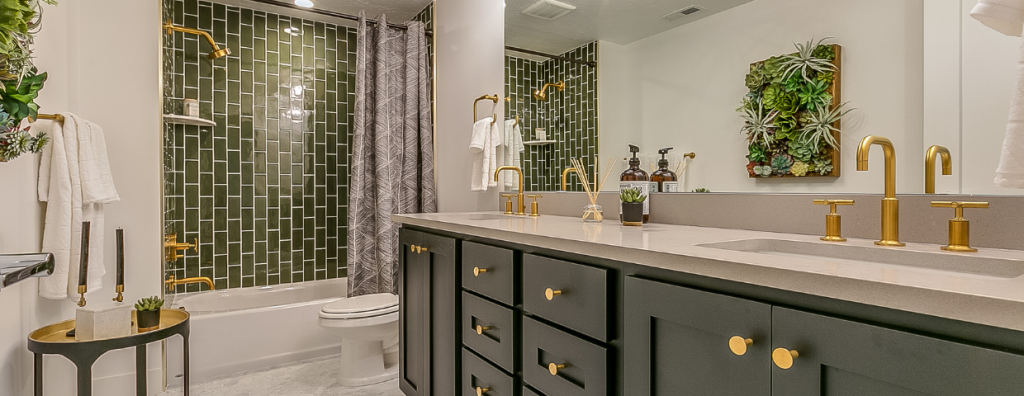
The thought of upgrading a bathroom often brings to mind large-scale renovations, demolition, and hefty price tags. Even projects like replacing a backsplash or repairing tile can be more involved than you might think. However, it’s possible to give your bathroom a makeover without breaking the bank (or your back). Whether you’re looking to just freshen it up or make it feel like your own personal spa, these simple projects can help take your bathroom to the next level.
Upgrade your Décor
If you want to make a big splash without spending big money, consider upgrading your bathroom with new décor. A fresh coat of paint on the walls or a bold, patterned wallpaper can completely change the character of the space, while accent pieces like a new shower curtain and towel racks can reinforce your color choices. Installing shelving is a simple, functional tactic that gives dimension to your walls. Whether it’s in the shower, above your toilet, or beside your vanity, a shelf can save surface space while helping to tie the room together.
Upgrade your Tub
Upgrading your tub doesn’t have to mean buying a replacement. Simply refinishing your tub will have it looking brand new and helps you save money. Over time, tubs accumulate cracks, dings, and discoloration due to mold, but refinishing can cure these imperfections right away. Start by removing all hardware from the tub. Sand the whole surface, fill in any cracks or holes with putty or epoxy, then sand them smooth. Apply multiple layers of primer and topcoat, give it a buff, and enjoy your brand-new bathtub.
If refinishing your tub is too much to handle, consider simply touching it up. Fill in any cracks and apply a fresh line of caulking around the surface. After this is done, shop around for new tub hardware to polish off your cost-effective bathtub makeover.
Upgrade Your Vanity
With just a few tweaks, you can turn your vanity area from a mirror with counter space to an impactful centerpiece. Instead of going all out with a new cabinet install, simply replacing your cabinet hardware and drawer pulls can make a big difference. Think of ways your new hardware can reinforce the style of your bathroom. Match them with your shower rod, faucet, and showerhead to make your bathroom more eye-catching.
Your vanity also offers a great opportunity to add some color to your bathroom. Giving it a fresh coat of paint will help to liven up the space at a low cost. For wooden vanities, a re-stain is a great way to give them new life. Start by removing the doors and drawers. Apply wood stripping to all surfaces, then let them sit for the recommended time. Now you can begin to scrape away the old finish. Sand down all surfaces and apply the primer before staining the wood. Once your stain settles in, apply a second coat and your vanity will be good as new.
Finishing Touches
Well-organized surfaces and compartments will help to create serenity in your bathroom. Whether it’s in the shower, the medicine cabinet, or below the vanity, look for multipurpose organizers that help cut down on bathroom clutter and save space. Add in natural elements like bamboo and river rocks to make your bathroom feel like a soothing sanctuary.
For more ideas on affordable home makeovers, check out our tips for upgrading your bedroom, home office, and kitchen.


SELLER SUCCESS STORY: Radical Midwives Pass the Baton

After more than 40 years of owning the first midwifery practice in Southeast Seattle, founders and co-owners Marge Mansfield and Suzy Myers have sold their building to new local owners. Several years ago, they passed the practice on to a fabulous local midwife, Heather Chorley, who continues to provide the absolute best care to the community. The current owners are happy to have Heather and Seattle Home Maternity Service as tenants, hopefully for many years to come.
Marge and Suzy are a dynamic duo who pioneered the field of midwifery in this area. They have, over the past 40-plus years, played a variety of other key roles in the development of midwifery locally and nationally.
They began their training together in 1975 as part of a women’s community health center in Seattle. With physician supervision, their group attended more than 250 births over the following three years. Recognizing the need for formal education and licensure, they co-founded Seattle Midwifery School (SH MS) in 1978, and both served at times as active faculty, staff, and board members over the following 35-plus years. In 1980, Marge and Suzy were among the first “direct entry” midwives (meaning not already holding nursing degrees) educated in the United States to obtain Washington State midwifery licenses.
In 1983 they remodeled their Columbia City site to include a licensed birth center in the very private lower level to offer midwifery services to women on Medicaid. Until the early 2000’s, state Medicaid did not reimburse for home delivery!
I have known Marge and Suzy for more than 25 years and was so happy to assist them in selling their ‘baby’ to good friends who live in the neighborhood; it was truly a win-win for everyone.
Selling a property that hasn’t been listed can be tricky, as value must be established and both parties have to be satisfied. When I do a market analysis on a property I am selling, I can never really say exactly how much it will sell for as it is up to market demand, and lately properties have been selling for way more than the listed price.
Also, the property was complicated as it was zoned commercial/residential, so there were several ways to access it; as an existing commercial space, land value for town houses, live/workspaces, or purely more commercial space. The existing building was just one-story with a basement on a small narrow lot, so development was somewhat limited, although building another two to three stories was certainly feasible. I approached my assessment in a few different ways as did the realtor who was helping the buyers. Our final number differed so I suggested we get a commercial appraisal which Marge and Suzy did, and we were able to negotiate on a price that seemed fair to all parties.
I’m glad the buyers had their own representation, as often when folks try to go it alone, it can get messy and adversarial. It is so much better to have an agent representing you, so they can be the buffer when emotions get high! Luckily, this was a very amicable situation but often that is not the case.
I am so happy for all parties and especially Marge and Suzy who no longer have the responsibility as landladies for an old building. During our numerous meetings at the Both Ways Café, pre-COVID-19, I was always amazed by the number of folks who would come up to them and say, ‘you delivered my baby 20 years ago’. It is so cool to be around such great women who have delivered so many babies in this community.
What Is a Craftsman Home?

Craftsman homes are very popular in Seattle. Most were built in the 1920s and 1930s, and are well-loved by Seattle residents who are drawn to the nostalgia of the city’s early roots. Most have been bought and sold a number of times, so the interior and exterior styles have often been altered significantly.
Types of Craftsman Homes
Craftsman Bungalow
For many people, the type of Craftsman home that immediately comes to mind is the Craftsman Bungalow. Bungalows are of modest size, with a covered porch and tapered columns supporting a low-pitched roof. Often, you’ll see these homes with double gable roofs, where the front porch will extend beyond the house. Bungalows are typically one or one-and-a-half stories.
Four Square Craftsman
The Four Square Craftsman is a larger, two-story version of the Bungalow, meant for bigger families. Accordingly, their construction saw a significant increase as soldiers returned from World War I. Their name comes from their design of four rooms on the first and second floors, one in each corner.
Prairie Craftsman
The Prairie Craftsman style can be traced back to renowned American architect Frank Lloyd Wright. Known for their low profile and powerful horizontal lines, Prairie Craftsman homes typically have an open floor plan and harmonize with their surrounding landscape.
Mission Revival
Borrowing greatly from the style of the Prairie Craftsman, the Spanish influences of the Mission Revival make it a unique Craftsman home. Typical features include a stucco exterior, arches, and open interior spaces with terracotta detailing. If someone points out a house as a “Spanish Bungalow,” you’re looking at a Mission Revival Craftsman.
Characteristics of Craftsman homes
Exterior
Highly identifiable, Craftsman homes share many commonalities, but seemingly, no two are identical. A covered porch with tapered columns is the first indicator you’re looking at a Craftsman. The roofs are low-pitched with overhanging eaves, giving way to exposed rafters underneath. It’s common for the windows to be double-paned, while the front doors will typically contain their panes in the upper section.
Interior
Known for their open floor plans, ample seating, and plenty of built-in shelving, the inside of a Craftsman home is a comfortable place to be. Reflecting the hard-working nature of their style, you’ll find plenty of handcrafted woodwork, stonemasonry, and brickwork throughout the interior. Fireplaces are often the central feature of Craftsman living rooms.
Now that you know a bit more about the Craftsman home and how to identify it, look for examples of these characteristics in your neighborhood. Due to the widespread popularity of the Craftsman style, chances are you won’t have to look too far.
Why Should You Stage Your Home When It’s For Sale?
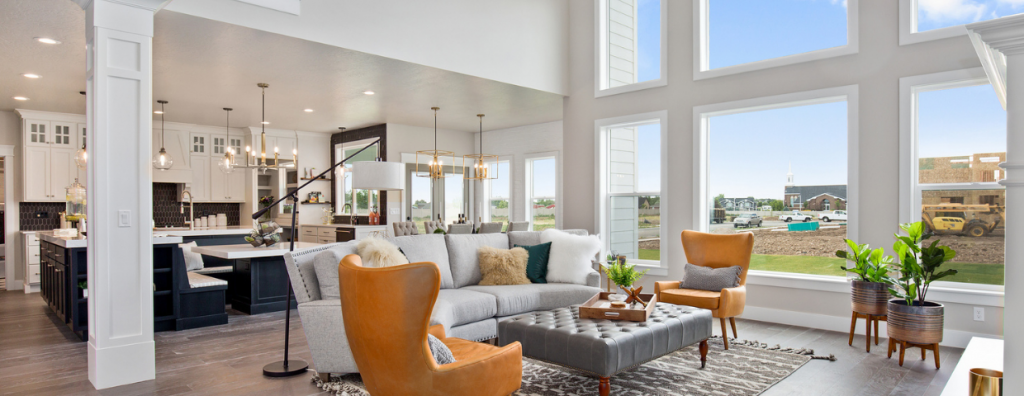
In order to sell your home, it must be successfully marketed to potential home buyers. Developing a winning strategy to attract as many buyers as possible to your home is something your real estate agent will work on, and part of that process may include staging.
Staging doesn’t just involve decorating your home; it’s using furniture and décor to reveal the possibilities in the space in order to make it appealing to a wide variety of buyers. It is an important step to helping buyers imagine the space for their own use, and it often leads to a higher dollar value and quicker sale time.
Staging for Buyers
A well-staged home creates stunning photographs that will attract buyers as they search online. In 2020, 97% of home buyers used the internet to search for prospective homes, and about half of them used mobile devices like smart phones and tablets. Because photos on a mobile device can be quite small and easily swipeable, staging has the potential to grab a buyer’s eye and pull them into the listing. Once they visit in person, staging serves to elevate your space while allowing buyers to visualize themselves living in your home.
Investment and ROI
For a relatively low investment, the return on investment (ROI) for a staged listing is worth it for just about any home seller. No matter the size of your home, the average investment on staging is 1% of the sale price of the home. And that 1% investment can lead to amazing gains. According to a 2020 survey by the Real Estate Staging Association, of those who spent 1% on staging, 75% saw a return of 5-15% over the asking price. As this shows, investing in staging can turn into one of the best ways to add value to your home.
In addition to increasing the dollar value of your home, staging is also likely to lead to a quicker sale. In 2020, staged listings sold after an average of 23 days on market. That’s two days faster than the national average of 25 days on market in the same year.
Your real estate agent can connect you with a professional stager who they will work side-by-side with to create a cost-effective strategy for staging your home and getting it sold in the most efficient and effective manner.
Seattle City Council Passes Resolution Endorsing Southeast Seattle Creative District

Last month, the Seattle City Council passed a resolution supporting a proposal to establish an official creative district in the Southeast Seattle neighborhood of Rainier Valley.
The Council voted unanimously to pass the resolution endorsing the state designation for the area stretching from John Muir Elementary School in the north to Rainier Beach High School in the south.
Afua Kouyate — Executive Director of ADEFUA Cultural Education Workshop — is leading the effort to apply for the state’s creative district designation.
“It’s about breathing energies into South Seattle,” she told the South Seattle Emerald. “I had so much dialogue with people [who were] like, ‘Oh, well we already have a business district in South Seattle. Oh, we already have our merchants association. We already —’ Yeah, but everybody is comfortably segregated. Nobody’s really doing things together.”
The state’s eight other creative districts are in Twisp, Tenino, Langley, Edmonds, Chewelah, Port Townsend, Issaquah and Olympia.
According to the Washington State Arts Commission, “A Creative District is a fun place to live, work, and visit. It’s a geographically defined area of cultural and economic activity. It’s the heart of a community. It is a place for people to gather and enjoy their community’s arts and culture.”
In addition to ADEFUA Cultural Education Workshop, a variety of other southeast Seattle arts organizations are leading the charge for the state’s designation, including:
- SEED Arts
- KVRU Radio
- Rainier Valley Rotary
- Rainier Beach Action Coalition
- Seattle World Percussion Society
- Urban Impact
- Seattle Office of Arts and Culture
- Communities Rise
- QueenCare
- Northwest Tap Connection
- The owners of the Black and Tan Hall
Jimmy Fallon Lists Quirky, Kid-Friendly Gramercy Park Penthouse for $15M
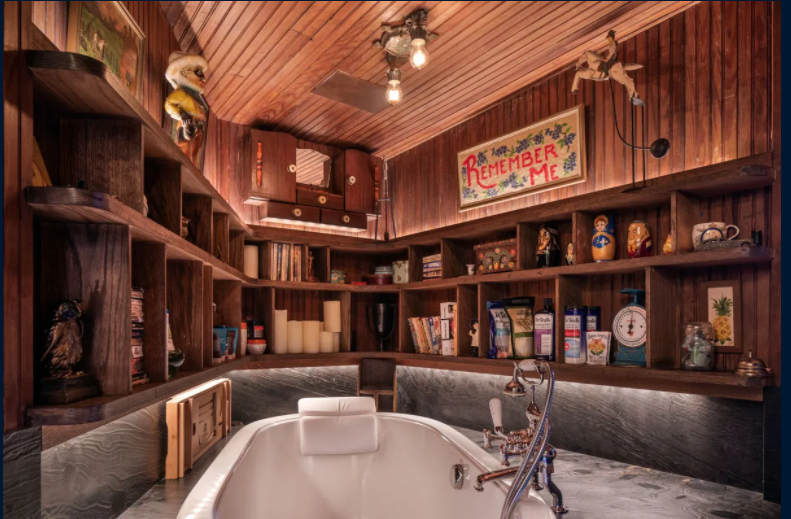

“Tonight Show” host Jimmy Fallon and his wife, film producer Nancy Juvonen, have listed their downtown Manhattan penthouse for $15 million. The quirky, kid-friendly home at 34 Gramercy Park East combined four different apartments over three floors to create a unique home like no other in New York City.
From the listing agents:

Celebrating the bones and architecture of the famed 34 Gramercy Park East, while transforming the space into a singularly enhancing home, this jewel box is perched atop the southwest corner of the historic landmark. Features of the approximately 4,950 square-foot home include original, restored window frames and casings throughout, original, restored hardwood floors throughout, and the highest quality fixtures and finishes combined with a curated collection of treasured vintage and antique finds from around the world.

Enter this imaginative space via the seventh floor and into a gracious entry foyer. Off the entry is an elegantly proportioned The living room, papered in rare vintage wallpaper from the 1940’s and paneled in skewed wood-planking designed by Bednark. A plush custom sofa and in-ceiling projector make this room the perfect place for casual gatherings.

Move into the west-facing eat-in kitchen, the heart of the home, which has awe-inspiring views over Gramercy Park, featuring state-of-the-heart home appliances, and custom cabinetry with E.R. Butler hardware. The room offers comfortable dining for six and bar-seating for eight beside a gas fireplace with original mantel set with vintage tiles. Adjacent to the kitchen is a show-stopping walk-in pantry which once functioned as a working sound studio (and is still fully sound proofed). Along with the living room and kitchen, two spacious bedrooms with two full baths, a home office and laundry room complete the seventh floor.

A beautifully custom-crafted staircase unites the home’s three floors and is adorned by a whimsical mural. Below the staircase is a children’s dream: a hidden playroom equipped with monkey bars, secret hatch doors, a chalkboard wall, and a “jailhouse intercom” to the upstairs playroom.
The “piece de resistance,” of the home’s eighth floor is the west-facing “Saloon Room.” This spectacular entertaining space features a vintage barback with custom inlaid stained glass and is complimented by a custom-designed fully equipped wet bar, and a gas fireplace with stone hearth. Also on the eighth floor are two additional bedrooms (one currently used as a home gym) and a full bath.

Ascending to the ninth floor, the highest floor of the building, you will find the primary suite and the private wing of the home. The primary suite is a zen and peaceful retreat, bathed in light from newly installed skylights. Features of the primary suite include a gas fireplace, wet bar with refrigerator, custom built-in massage bed, and a cozy seating area designed to evoke the inside of a hull of a tree. Two fully outfitted walk-in closets and a bath with his and her vanities, steam shower, and an entirely separate room with soaking tub complete the primary suite. The ninth floor also features two spacious bedrooms, another full bath, a second playroom and second laundry room – completing this unparalleled and unique offering.
34 Gramercy Park East is a white-glove full-service cooperative, built in 1883 as New York City’s “first cooperative.” It has a storied history and has been home to many notable figures, including James Cagney and Margaret Hamilton, the Wicked Witch of the West.
Go here for more listing details.

The Importance of Pre-Approval

The Pre-Approval Process
There is an important distinction to made between two important steps of your mortgage application process: pre-qualification and pre-approval. They are similar in that they both help to inform your financial standing, but there are key differences between the two.
Pre-qualification
Pre-qualification is the first step in your mortgage application process. It will help you to understand the approximate loan amount you can expect to qualify for. You’ll begin by sharing your financial information—debt, income, assets, etc.—with you bank or lender. After reviewing the information, the bank or lender will give a loan estimate. The process is relatively simple, only taking a few business days to process.
Pre-approval
The pre-approval process is more involved than pre-qualification. After submitting a mortgage application, your lender will require all the necessary info to conduct a thorough credit history check and review of your financial health. Getting pre-approved will give you a better idea of how much you can borrow, estimated monthly costs, and what interest rates you can expect on your loans. Mortgage pre-approvals are typically valid for 60 to 90 days.
Benefits of Pre-Approval
Credibility
The truth is, each home on the market can only go to one buyer. To maximize the chance that your offer is accepted, sellers need to know that your offer is serious. Getting pre-approved shows that you are financially prepared and, in the event that your offer is accepted, there will be no hold ups in obtaining your mortgage. This assurance is what sellers want to know about their potential buyers, especially in a seller’s market.
Home search
Not only does pre-approval help to bolster your case as a buyer, but it also Indicates your affordable price range. By knowing your budget, you will be able to hone your home search and start preparing offers, eliminating any potential wasted time looking at houses you can’t afford.
Closing process
Once your offer is accepted, you’ll be counting down the days to move-in. Unfortunately, the closing process can often drag on, leaving buyers feeling like they’re in post-purchase limbo. Pre-approval will speed up the closing process, since the mortgage approvals have already been taken care of, allowing you to focus on next steps like appraisals and inspections.
When to Get Pre-Approved
Being financially prepared for a home purchase is a solid indicator that you’re ready to go about getting pre-approved, but what does that look like? Buying a house means taking on serious debt, so it’s worth your while to begin forming a long-term strategy for paying off outstanding debt before getting pre-approved. Having adequate savings for a down payment is a sign that you’re ready to make your offer. For any questions about the pre-approval process and to get connected to a mortgage professional, contact your Windermere agent.
